
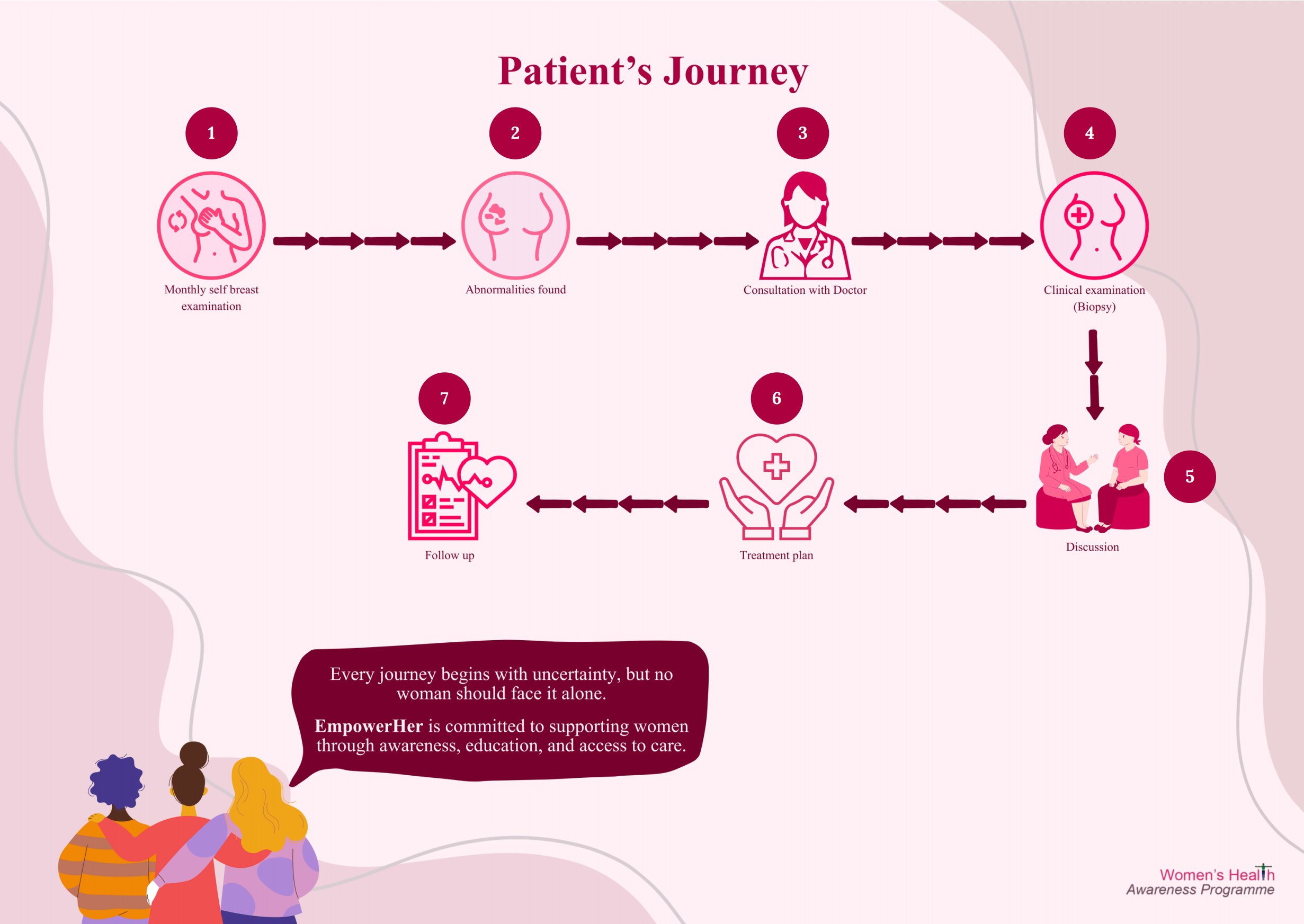
The journey begins with regular breast self-examinations or clinical breast examinations. Early awareness and proactive health-seeking behaviour play a critical role in identifying potential abnormalities at the earliest possible stage.
When abnormalities are detected during screening or examination, patients may undergo additional imaging investigations to obtain a clearer clinical assessment.
Patients requiring further evaluation are referred to a breast surgeon or specialist for comprehensive assessment and clinical consultation.
A breast biopsy may be performed to obtain tissue samples and confirm a diagnosis.
Following diagnosis, patients meet with their healthcare team to discuss treatment options, expected outcomes, potential side effects, and ongoing care requirements.
Depending on the patient’s condition, treatment may include surgery, systemic therapy, radiation therapy, or a combination of clinical interventions.
Following treatment, patients continue with regular follow-up appointments to monitor recovery and detect any signs of recurrence or disease progression.
Learn more about screening, diagnosis, and treatment in our Education centre.
Visit Education